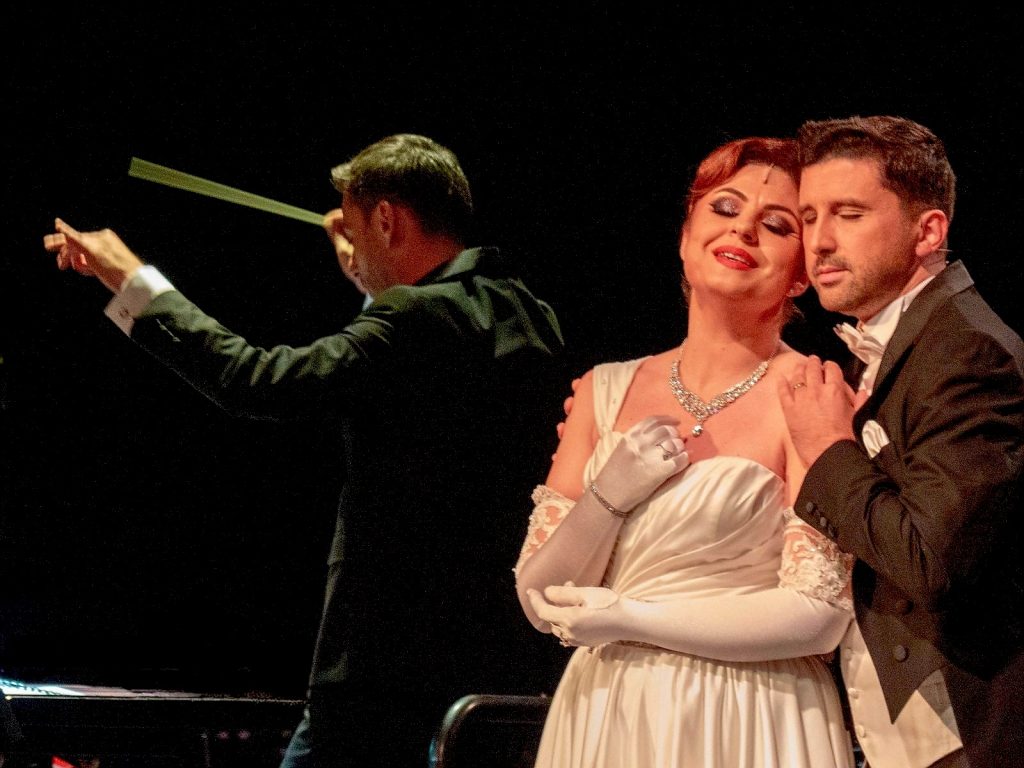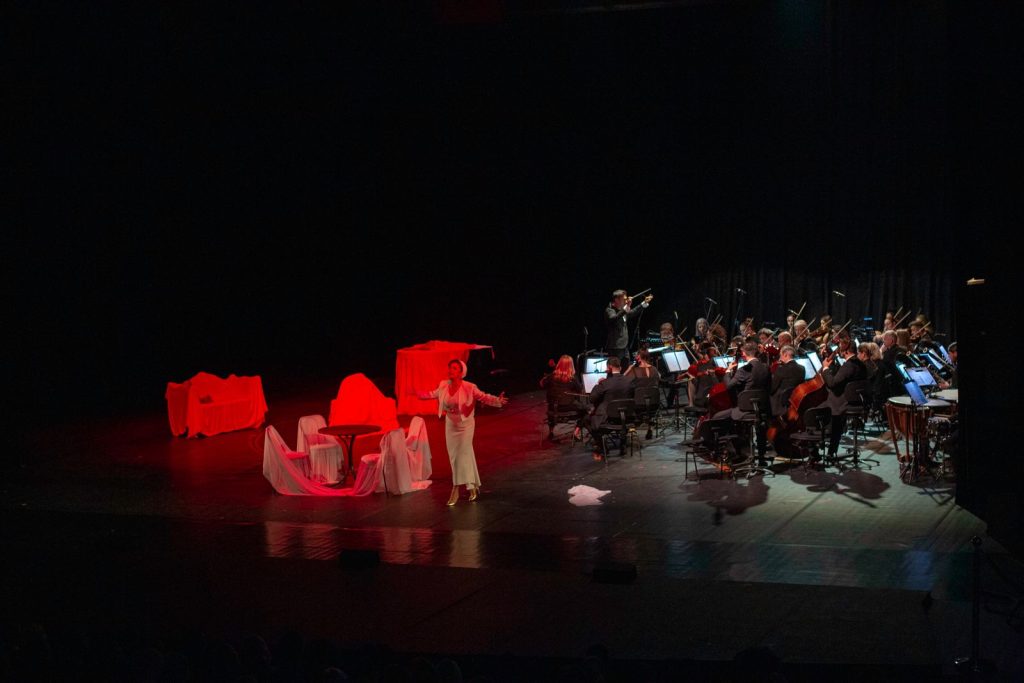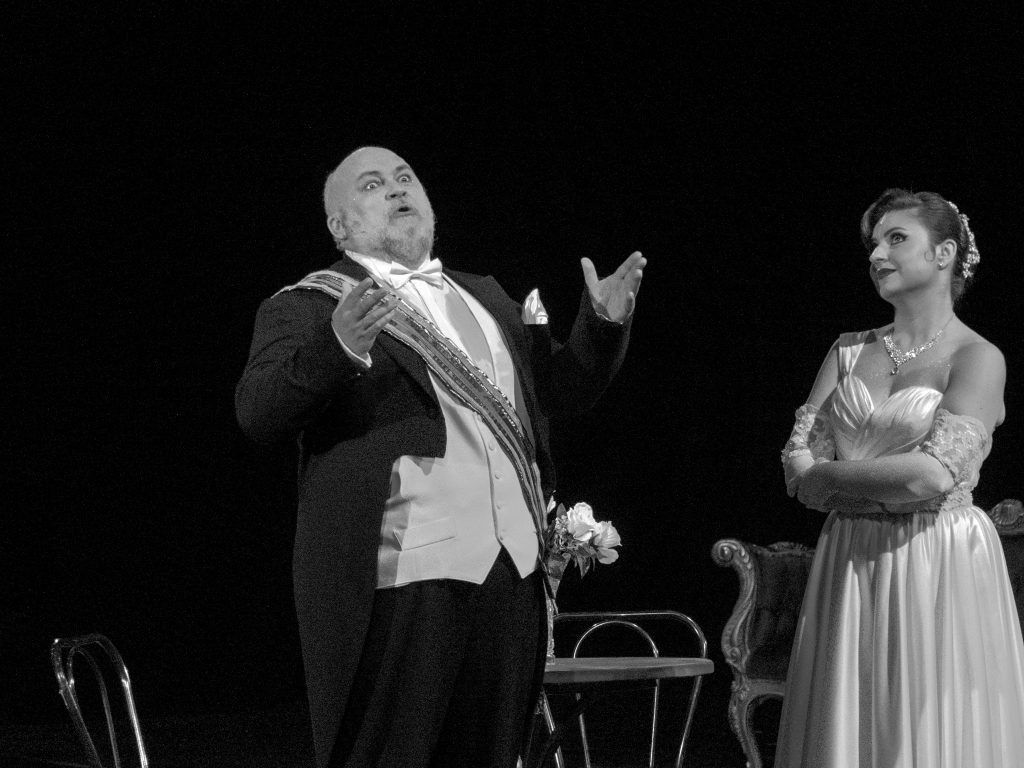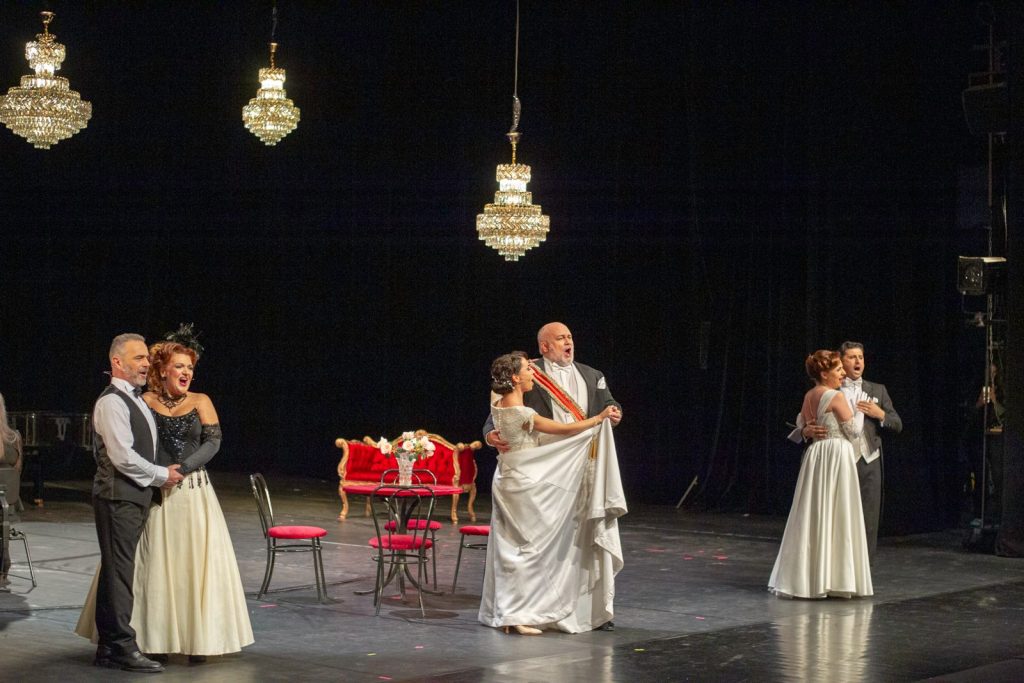


Wiener Blut (Viennese Blood) is an emblematic operetta built on the music of Johann Strauss II — a tribute to the spirit of imperial Vienna, but also a work with a story of its own.
The premiere took place on 26 October 1899 at the Carltheater in Vienna and was the result of a project conceived by the theatre’s director, Franz Jauner. The libretto was written by Viktor Léon and Leo Stein, while the score — a refined collage of earlier Strauss compositions — was adapted and orchestrated by Adolf Müller Jr., due to the composer’s poor health. Strauss passed away shortly before the premiere, symbolically marking the end of an era dominated by waltz and Viennese elegance.
The action of the operetta is formally set during the Congress of Vienna (1814–1815), but the story itself — a romantic comedy filled with mistaken identities and colourful characters — does not follow the historical context closely. Although the premiere was almost a complete failure, and the production was withdrawn after only a month, a 1905 revival at the Theater an der Wien — with a revised libretto — achieved unexpected success. Since then, Viennese Blood has gradually entered the repertoire of major operetta theatres, including the Volksoper in Vienna, where it continues to be performed regularly to this day.
Despite its pasticcio structure — a composite form built from earlier works — Viennese Blood contributed significantly to the popularization of this genre in early‑20th‑century Vienna. Its success paved the way for similar productions such as Frühlingsluft (1903, with music by Josef Strauss), Alt‑Wien (1911, with music by Josef Lanner), Die tolle Therese (1913, with music by Strauss Sr.), and Teresita (1914, with music by Waldteufel). The genre reached its peak in 1916 with Das Dreimäderlhaus (The House of the Three Girls), a singspiel built on themes by Franz Schubert, which became the most beloved operetta of its time during the First World War.
Today, Viennese Blood remains a controversial yet charming operetta, loved especially for the waltz that gives the work its title — an orchestral masterpiece that nostalgically evokes the Viennese charm of bygone days. Portraying an idealized Vienna, with passionate ballerinas and spirited seamstresses, Viennese Blood offers a romantic and stylized vision of a vanished world, becoming a heritage piece of the genre.

Cast
Conductor: Constantin Grigore
Eduard: Mihai Urzicana
Gabriela: Mihaela Alexa
Frantzi: Daniela Bucșan
Vercingetorix (Prim Ministru): Orest Pîslariu-Ranghilof
Pepi: Gabriela Daha
Josef: Daniel Găină-Cojuharov
Conductor: Constantin Grigore
Eduard: George Vîrban
Gabriela: Mihaela Alexa
Frantzi: Daniela Bucșan
Vercingetorix (Prim Ministru): Orest Pîslariu-Ranghilof
Pepi: Gabriela Daha
Josef: Valentino Tiron
Conductor: Constantin Grigore
Eduard: George Vîrban
Gabriela: Mihaela Alexa
Frantzi: Daniela Bucșan
Vercingetorix (Prim Ministru): Orest Pîslariu-Ranghilof
Pepi: Gabriela Daha
Josef: Valentino Tiron
Conductor: Constantin Grigore
Eduard: George Vîrban
Gabriela: Rodica Ștefan
Frantzi: Daniela Bucșan
Vercingetorix (Prim Ministru): Orest Pîslariu-Ranghilof
Pepi: Gabriela Daha
Josef: Valentino Tiron
Conductor: Constantin Grigore
Eduard: Mihai Urzicana
Gabriela: Mihaela Alexa
Frantzi: Mediana Vlad
Vercingetorix (Prim Ministru): Orest Pîslariu-Ranghilof
Pepi: Gabriela Daha
Josef: Daniel Andrei Găină-Cojuharov
Conductor: Constantin Grigore
Eduard: George Vîrban
Gabriela: Rodica Ștefan
Frantzi: Daniela Bucșan
Vercingetorix (Prim Ministru): Orest Pîslariu-Ranghilof
Pepi: Gabriela Daha
Josef: Valentino Tiron